
Copper: Tips on Scrapping the King of Industrial Metals
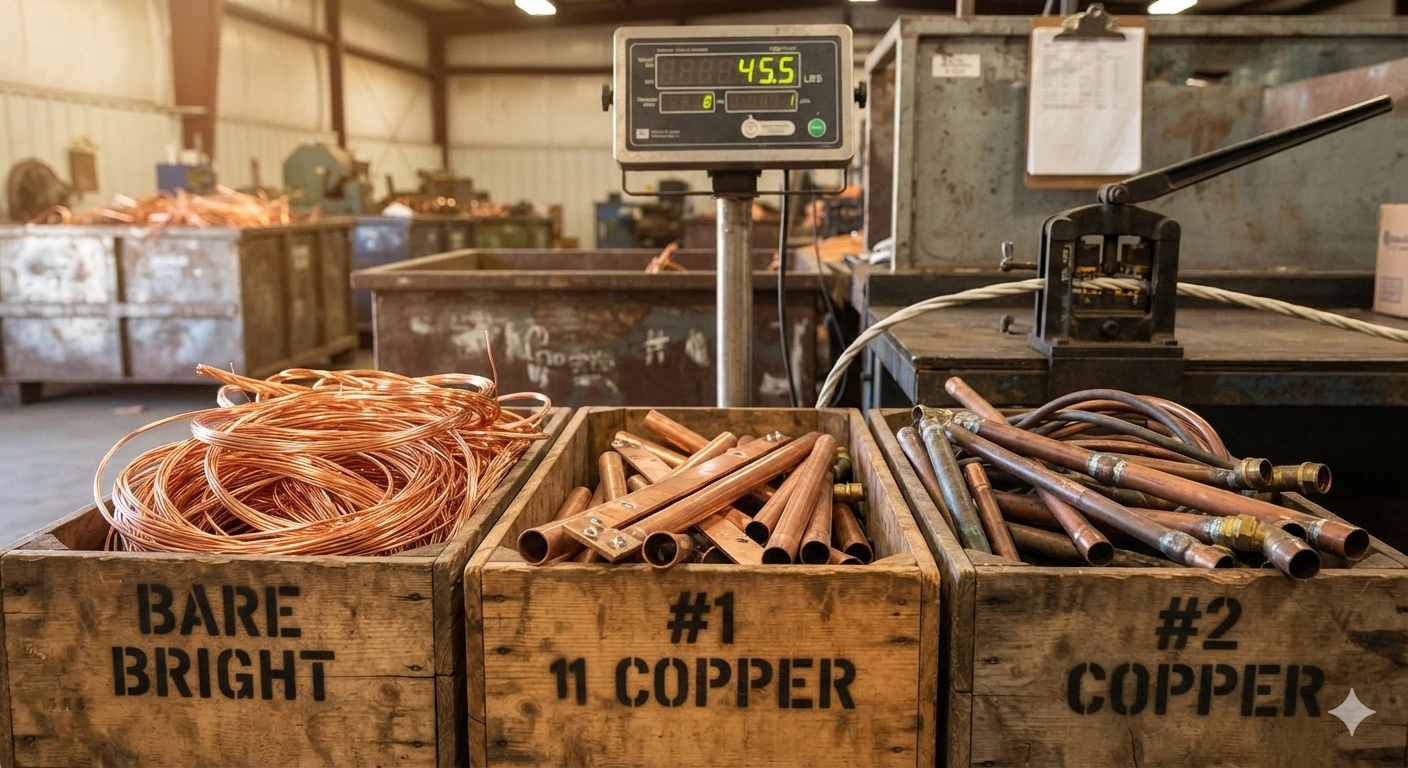
Copper is widely considered the “king” of the base-metal recycling world. Unlike lower-value ferrous metals such as steel and iron, even a relatively modest amount of copper can represent meaningful value at the scale. But copper is not simply copper: its grade, cleanliness, and preparation can have a significant effect on what a scrap yard will pay.
This guide explains the major scrap-copper grades, how market copper prices differ from local scrap-yard prices, and what you can do before heading to the yard to better understand the value of what you have.
Understanding Copper Grades
One of the most important factors in valuing scrap copper is its grade. Copper scrap is separated into categories based on factors such as purity, form, coatings, solder, fittings, and other contamination. Exact grading requirements can vary by buyer, and it is helpful to understand how your local yard classifies material before you process or sort a large load.
Bare Bright Copper
Bare Bright generally refers to bare, uncoated, unalloyed copper wire. It is among the most desirable copper-scrap categories, even above #1 Copper, because very little processing is required before the copper can be recycled. Wire gauge matters, so check with your local yard to see what gauges they accept as Bare Bright.
#1 Copper
#1 Copper generally includes clean, unalloyed and uncoated copper solids and tubing, such as clean pipe, bus bar, clippings, and similar material. Solder, paint, fittings, and other attachments can cause material to be downgraded.
#2 Copper
#2 Copper includes lower-grade copper solids or wire that may contain more contamination than #1 material. Solder, coatings, oxidation, attachments, or other impurities can downgrade your copper to #2 Copper.
Insulated Copper Wire (ICW)
Insulated copper wire still has its plastic or rubber jacket. Its value depends heavily on how much recoverable copper is inside compared with the total weight of the cable. It may be worth your time to strip some ICW to bare wire if you have the means to do so, since clean bare copper can command a higher price.
Sorting matters. Keep Bare Bright, #1, #2, and insulated wire separate. Mixing higher-grade copper with lower-grade or contaminated material can affect how the load is classified and priced.
Market Value vs. What a Scrap Yard Will Pay — Know the Difference
Market copper price and scrap-yard price are not the same thing. The market price provides a benchmark for refined copper and can help you understand its underlying value and current market direction. It should not be viewed as the price a local yard will pay for scrap.
The difference between the market benchmark and a yard’s purchase price is due to several factors:
- Processing and refining — Scrap must be prepared before the copper can return to usable industrial form.
- Operating costs — Equipment, scales, facilities, transportation, regulatory compliance, insurance, and labor all carry costs.
- Material recovery — Insulation, solder, fittings, dirt, and other material may add weight without adding recoverable copper.
- Market risk — Copper prices can move between the time a yard buys material and the time it is processed or resold.
- Margin — Like any buyer and reseller, the yard needs room between its purchase cost and eventual sale value to operate profitably.
How Market Prices Help the Scrapper
While knowing the market price doesn't tell you what your local yard will pay, it can make you a better-informed seller.
Copper prices move with industrial demand, supply conditions, economic activity, currency movements, and other market forces. Following those prices can help you understand whether copper values have been rising, falling, or remaining relatively steady.
Common Sources of Scrap Copper
Copper appears in many common residential, commercial, and industrial items:
- Renovation and plumbing material — Copper tubing, pipe, fittings, electrical cable, and building wire.
- Appliances and equipment — Motors, compressors, power cords, wiring harnesses, and other components.
- Electronics and electrical equipment — Power supplies, transformers, heavy cables, motors, and other electrical components.
Always make sure material is yours to sell and can be handled safely. Some equipment can contain refrigerants, hazardous components, stored electrical energy, sharp edges, or other hazards that require proper handling.
Preparing Copper Before You Go
A little preparation can make your material easier to grade and may improve its value.
- Separate the grades. Do not mix your Bare Bright, #1, #2, and insulated wire.
- Remove contaminants when practical. Brass valves, steel fittings, soldered components, and other attachments can affect classification. When practical, removing them may improve the grade and value of your copper.
- Consider stripping insulated wire. Removing insulation from suitable wire may move the copper into a higher-value category. Compare the potential increase in value with the time and effort required.
- Keep the material reasonably clean. Dirt and unrelated debris add weight but not copper value and can complicate grading.
The goal isn't necessarily to process everything as much as possible. It is to understand whether the additional work is likely to produce enough additional value to make the effort worthwhile.
Questions to Ask Before Visiting a Scrap Yard
Establishing a good working relationship with your scrap yard can be helpful. Asking a few questions before you arrive can also help you know what to expect at the scale.
- What are you paying today for Bare Bright, #1 Copper, #2 Copper, and the type of insulated wire I have?
- How will you grade the material I have?
- Do you have a minimum quantity or weight requirement?
- What identification or documentation do I need?
- How do you pay?
Bottom Line
Industrial metals may not carry the prestige of gold or silver, but copper can still represent real value. Know the market benchmark. Know your grade. Prepare your material. Compare local prices. A little homework could really pay off.
As always,
Know the numbers. Make better decisions.