Why Would Anyone Buy Silver?
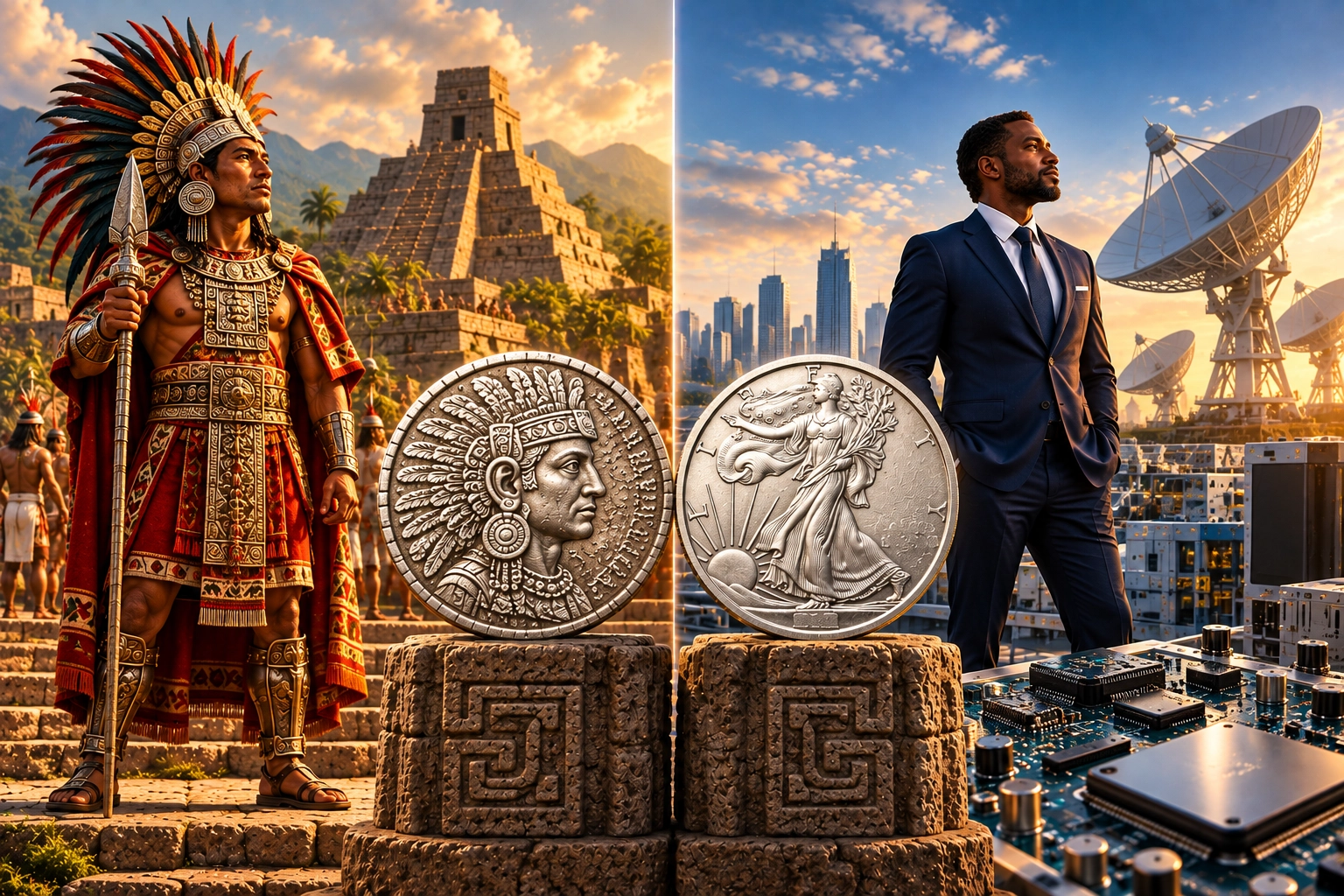
Like gold, people have valued silver for thousands of years. It has served as money, jewelry, tableware, decoration, and a store of wealth.
But silver has another identity that separates it from gold. Industry needs it.
Silver is more widely used in electronics, solar energy, vehicles, electrical infrastructure, medical applications, and countless other products. The combination of a precious metal people choose to own and an industrial metal manufacturers need to use makes silver unique.
A Performer at Home and at Work
Silver has a long monetary history. It has been used for trade and as the basis of monetary systems for thousands of years, and silver coins circulated widely throughout much of recorded history.
Today, people still buy silver coins, rounds, and bars as physical stores of value.
At the same time, industry consumes enormous quantities of silver because of its physical properties. Pure silver has the highest electrical and thermal conductivity of any metal, along with extremely high reflectivity. Those characteristics make it useful in applications ranging from electrical contacts and circuit boards to solar cells.
Silver therefore lives in two worlds, and both create demand for the same metal.
Good Enough for Warren Buffett
Warren Buffett is famous for questioning the investment case for gold and other assets that do not produce income. And yet in the 1990s, Buffett made a very large investment in silver.
Berkshire Hathaway purchased 111.2 million ounces of silver in 1997, a move that garnered considerable attention in the silver market.
Buffett later explained his reasoning in Berkshire Hathaway's 1997 shareholder letter. He had followed silver's fundamentals for decades and concluded that bullion inventories had fallen enough that a higher silver price would eventually be required to bring supply and demand back into balance.
The story is useful because it illustrates another reason someone might buy silver: the economics of the metal itself.
Silver is not valuable only because people regard it as precious. Manufacturers require it, mines and recyclers supply it, investors buy and sell it, and changes anywhere in that equation can affect its price.
Industry Needs Silver
Industrial demand for silver has grown substantially in recent years. Today it is found in electrical contacts, circuit boards, automobiles, appliances, telecommunications equipment, power infrastructure, solar cells, and many other applications. Its conductivity and durability make it particularly useful when reliable electrical connections matter.
In 2024, global industrial silver demand reached a record 680.5 million ounces, according to the Silver Institute. Electrical and electronics demand was particularly strong, supported by photovoltaic solar, automotive applications, grid infrastructure, and applications related to artificial intelligence.
Demand isn't always a steady climb upward. In 2025, industrial silver demand declined about 3%, partly because solar manufacturers reduced the amount of silver used in photovoltaic cells and substituted other materials where possible. Despite occasional declines, the longer-term trend in industrial silver demand has been upward.
More Accessible Than Gold
There is also a much simpler reason some people choose silver: price.
An individual who wants to own physical precious metal can generally purchase an ounce of silver for far less money than an ounce of gold.
Someone can gradually accumulate individual silver coins, rounds, or small bars without committing the amount of money required to purchase comparable weights of gold. That accessibility has helped make physical silver popular among people who want to own tangible precious metal in smaller increments.
Silver Can Be More Volatile
Its market is influenced by investment demand, interest rates, currencies, industrial consumption, mine production, recycling, inventories, and expectations about the global economy. As a result, silver's price can move substantially.
Because silver has both monetary and industrial characteristics, those forces can sometimes pull in different directions. Economic uncertainty may increase investor interest in precious metals while weakening industrial demand. Strong manufacturing conditions may support industrial consumption even when investor interest is relatively subdued.
Higher volatility can produce larger percentage gains during some periods, but it can also produce larger declines. Silver's volatility is a characteristic, not an advantage.
What About the Gold-to-Silver Ratio?
Sometimes people follow and buy silver because of its relationship with gold.
The gold-to-silver ratio measures how many ounces of silver are equivalent in price to one ounce of gold. For example, a ratio of 80:1 means one ounce of gold has the same market value as 80 ounces of silver.
Some investors use changes in this ratio to compare the relative prices of the two metals.
A higher ratio means silver is less expensive relative to gold than it would be at a lower ratio. This does not automatically mean silver is undervalued or that the ratio must return to a particular historical level. The ratio is information, not a prediction.
So Why Would Anyone Buy Silver?
For some people, silver is a tangible store of value with thousands of years of monetary history. For others, its attraction comes from industrial demand and its importance to modern technology. Some appreciate its lower cost of entry compared with gold. Others follow its supply-and-demand fundamentals or its relationship with gold.
And some simply like owning physical silver.
Silver occupies an unusual position. It is simultaneously an ancient precious metal and a material used in some of the world's most advanced modern technologies.
There are many reasons to own silver—which may help explain why a metal valued by ancient civilizations continues to be desirable today.