What Is It Really Worth? When Melt Value Is Only Part of the Story
PreciousCalc.com can tell you, with reasonable precision, what the precious metal in an object is worth. That’s one answer.
But what is this object worth? Should I sell it? Is this a fair offer? What kind of value matters here? Those questions require judgment.
There are different ways to look at value. Determining the value of an item can be a tricky business. Coins, jewelry, antiquities, art and collectibles often require expert opinions from people who have developed insights over a lifetime.
What makes something valuable?
Let’s look at a few remarkable real-world objects with value far beyond the metal content.
How $0.10 Became $1,250,500: The 1894-S Barber Dime
In September 2026, an 1894-S Barber dime sold at auction for $1,250,500.
This 10-cent piece was valuable for several reasons. Only 24 were struck at the San Francisco Mint, and just nine are known to survive. The particular coin that sold had its own remarkable history: the late numismatist Q. David Bowers bought it in 1957, when he was 19 years old, for $4,750. It later sold for $77,000 in 1987 and $93,500 in 1990 before disappearing from the auction market for decades.
While it is made primarily of silver, nobody paid these big numbers for the silver content.
They were buying rarity, condition, history, provenance and collector desirability, all embodied in a tiny object.
The material something is made from may be an inconsequential part of the value.
The Mother Lode
Rarity doesn’t have to be manufactured.
Take the example of Pepita Canaã, the largest surviving natural gold nugget, found in Brazil in 1983. It weighs about 60.8 kg and contains about 52.3 kg of gold. The gold alone is worth millions, but this exceptional natural geological specimen has value beyond its melt value.
Melting it would give you gold. It would also permanently turn something rare into something ordinary.
That gives us another way to think about value: How difficult would this object be to replace? Sometimes the answer is, effectively, you can’t.
Historical Value: A Dollar Worth More Than $10 Million
While the 1894-S Barber Dime is impressive, it pales in comparison to our next example.
In January 2013, a 1794 Flowing Hair Silver Dollar sold through Stack’s Bowers Galleries for $10,016,875. At the time, it established a world auction record for a coin. The specimen was the finest known example, and specialists have suggested that it may have been among the very first silver dollars struck by the United States.
Again, the silver content is real. It has measurable value. But this isn’t merely an old piece of silver.
It comes from the first year the young United States issued silver dollars. Its survival connects a modern owner physically to the beginnings of American coinage.
Historical significance can have major importance when assessing value.
And the values are stacking. This coin has material value, collector value, rarity, historical significance and provenance.
What’s in a Name?
Two precious metal objects can contain similar quantities of gold or silver and yet command dramatically different prices when one was created by an important maker.
A piece by Van Cleef & Arpels, Cartier or Tiffany & Co. isn’t valued simply by placing it on a scale. Design, authorship, craftsmanship, rarity and the reputation of the maker become part of the object.
Take, for example, the Tiffany & Co. Ball of Yarn. Tiffany offered the handspun sterling-silver object for $9,000 in 2017—a price that had little to do with the value of the silver alone.
This doesn’t mean every signed item is valuable. It means the signature can contain information.
If you’re considering selling a piece for its metal content, a maker’s mark may deserve more attention than the weight and purity.
The Hope Diamond: When the Stone Is the Story
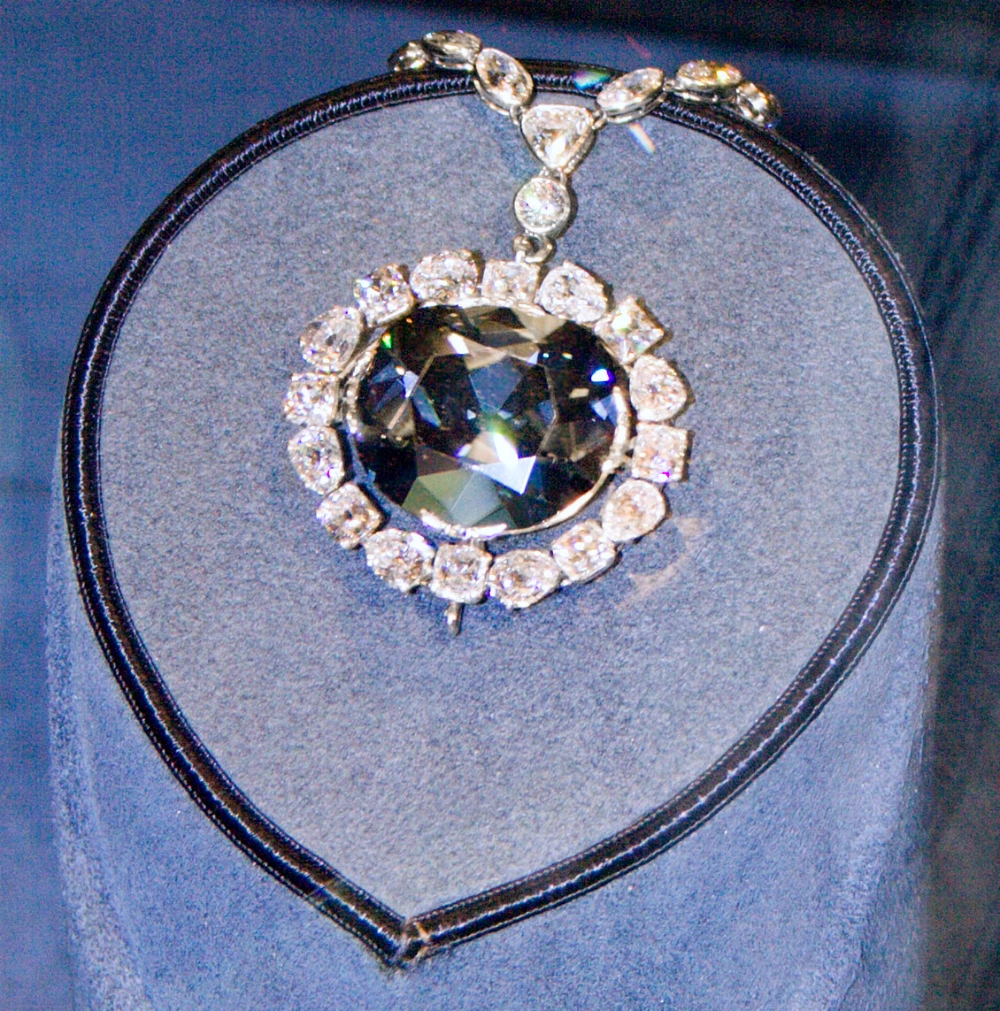
Even if you are familiar with the Hope Diamond, you may have trouble recalling its setting.
The Hope weighs 45.52 carats and is renowned for its rare deep-blue color, extraordinary history and unusual physical properties. Its documented story includes Louis XIV of France, the French Crown Jewels, theft during the French Revolution, Henry Philip Hope, Pierre Cartier, Evalyn Walsh McLean and Harry Winston, who donated it to the Smithsonian Institution in 1958.
Today it sits in an elaborate platinum setting surrounded by colorless diamonds, which is valuable on its own, but it is also inconsequential. The gemstone, its rarity, its natural properties, its history and its provenance overwhelm the value of the precious metal holding it.
Sometimes the most obvious precious metal isn’t the material that matters most.
What’s the Story?
The 1952 Cartier Panther Bracelet was owned by Wallis Simpson, the Duchess of Windsor. This provenance took an already valuable item to extraordinary heights.
Crafted from platinum, single-cut diamonds and calibré-cut onyx, with small emeralds for eyes, the bracelet was already made from valuable materials. But when it sold at Sotheby’s in London in 2010 for £4,521,250—about $7 million at the time—it set a world auction record for a bracelet and, at the time, for a Cartier jewel.
Who owned something? Who commissioned it? Where has it been? Can its history be documented?
Imagine two otherwise comparable pieces of jewelry. One has no known history. The other can be documented as having belonged to a famous historical figure.
Two otherwise comparable pieces of jewelry, one with provenance and one without, are no longer the same object in the eyes of a collector.
Nothing necessarily changed about the materials. The story changed, and sometimes that changes everything.
And unlike a manufacturer’s specification, provenance can continue to accumulate over time. An object’s journey is interesting and valuable.
Unmatched Skill, Unmatched Value
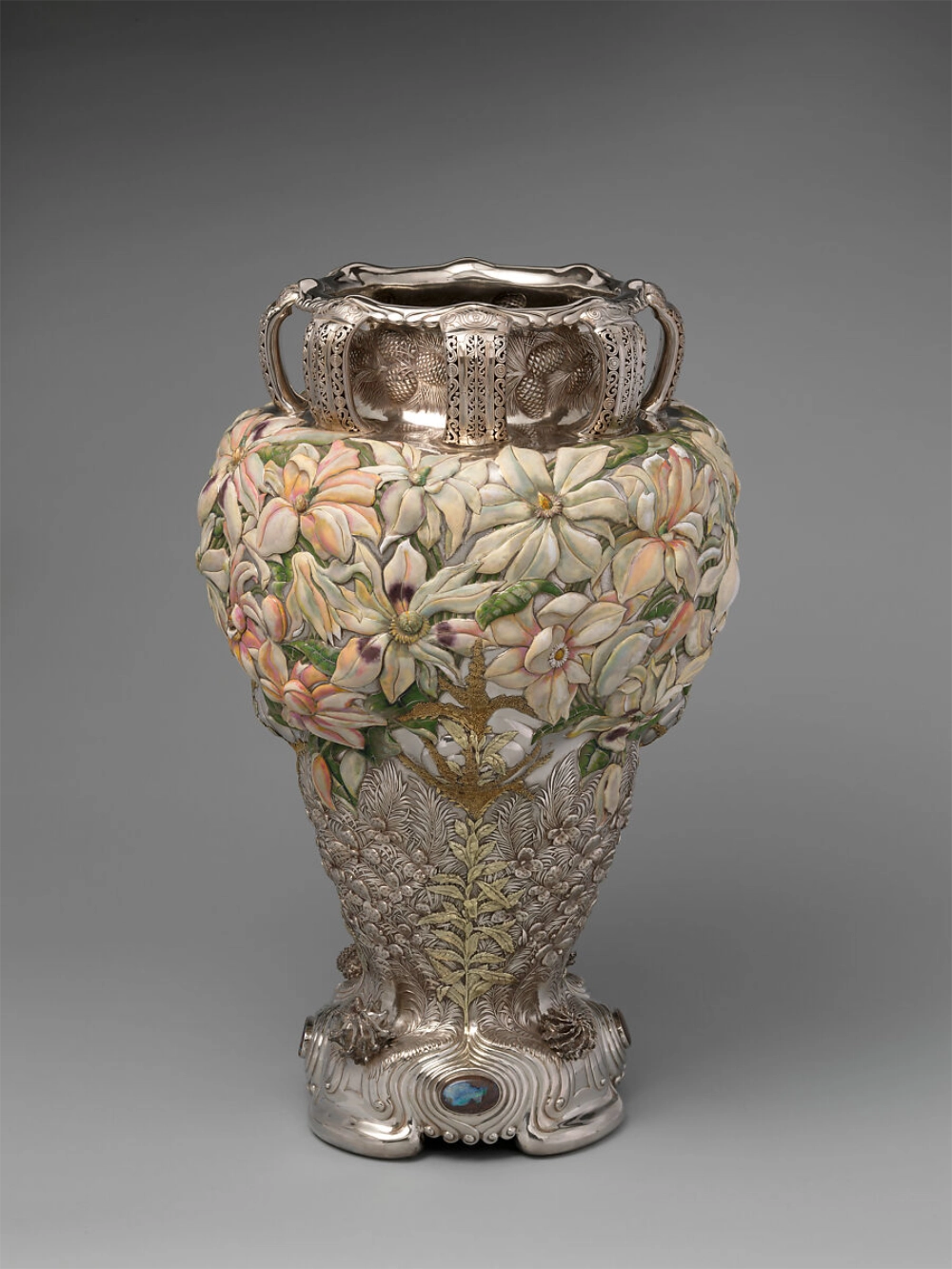
At the 1893 World’s Columbian Exposition in Chicago, Tiffany & Co. displayed an extraordinary object known as the Magnolia Vase.
The vase is enormous—nearly 31 inches tall and more than 57 pounds—and incorporates silver, enamel, gold and opals. But simply adding up those materials misses what Tiffany created.
Its form drew inspiration from Pueblo pottery. Its ornament incorporated imagery representing different regions of the United States. Pinecones represented the North and East, magnolias the South and West, cacti the Southwest, and American-mined gold was used for goldenrod. Contemporary observers specifically celebrated the workmanship, including the naturalism of its enameled magnolias.
Here, craftsmanship has transformed valuable materials into something more.
Melt the vase and the silver survives, while much of the value is lost.
The Magnolia Vase shows what happens when precious materials are put in the hands of highly skilled craftspeople.
Historical Value: Provenance on Steroids
An 18th-century Persian astrolabe in the collection of the Whipple Museum of the History of Science in Cambridge is made of brass. The instrument models the heavens, with a rete depicting the coordinates of stars and latitude plates representing the observer’s position on Earth.
Its brass has some material value. Not much. Treating it as scrap brass would be criminal.
The instrument preserves information about astronomy, mathematics, instrument-making and the scientific culture that produced and used it.
Historical significance teaches us about ourselves in a way metal alone never could.
Archaeology: Important Objects, Important Context
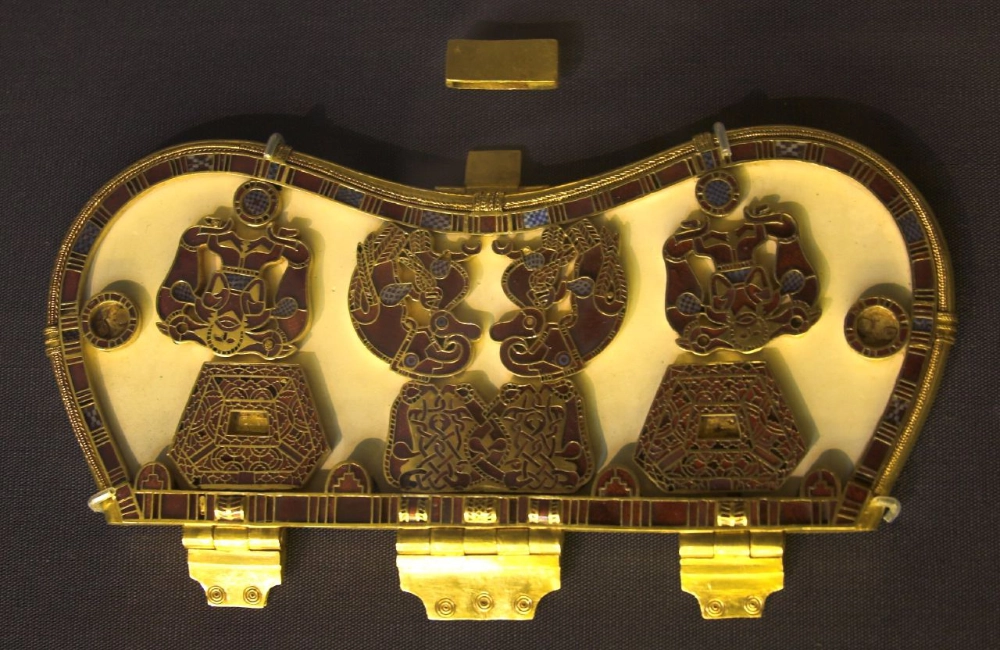
The famous Sutton Hoo purse lid provides another way of seeing value.
Made from gold, garnet and millefiori glass, the extraordinarily intricate Anglo-Saxon object was discovered as part of the Sutton Hoo ship burial in England.
The gold matters. The garnets matter. The craftsmanship matters.
But so does where it was found and what was found around it.
Archaeological context allows an object to tell a larger story.
In fact, modern scientific analysis of Sutton Hoo’s garnets has continued to produce information. Using newer analytical techniques, researchers have been able to investigate the geographic origins of garnets used in early medieval metalwork, contributing to our understanding of trade networks that stretched across enormous distances.
The object didn’t change. Our ability to learn from it did.
When Metal Captures the Culture
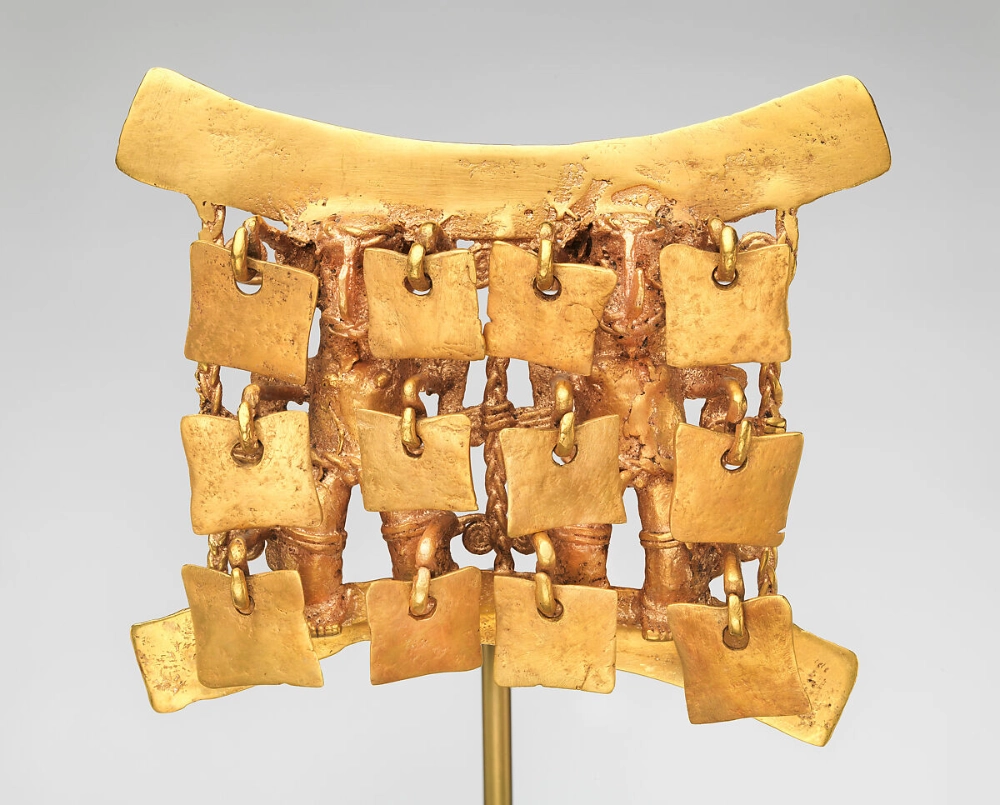
Gold pendants made by ancient peoples of Central America give us yet another perspective.
Artists in the Greater Chiriquí region produced elaborate gold pendants depicting humans, animals and composite supernatural beings. Some incorporated bats, crocodilians and other creatures whose imagery appears to have carried meanings that went far beyond decoration.
We can weigh the gold. But these objects are also expressions of the beliefs, technologies, aesthetics and identities of the cultures that created them.
That is cultural value.
An object can matter not simply because an individual wants to own it, but because it helps represent the story of a culture.
Sentiment: The Value Only You Can See
Not every important object belongs in a museum.
Imagine an ordinary gold wedding ring.
No famous maker. No important gemstones. Nothing particularly rare about it.
Perhaps its market value is close to its gold value.
But perhaps it belonged to your grandmother. Or it reminds you of your own wedding day and the life you built.
Now try to put a number on those memories.
A buyer doesn’t share your memories. The refinery certainly doesn’t. Melt value cannot measure a family story.
Sentimental value may be the most personal kind of value we’ve considered.
It is also a reminder that not every meaningful form of value can—or should—be converted into dollars.
Some Guys Just Have It All
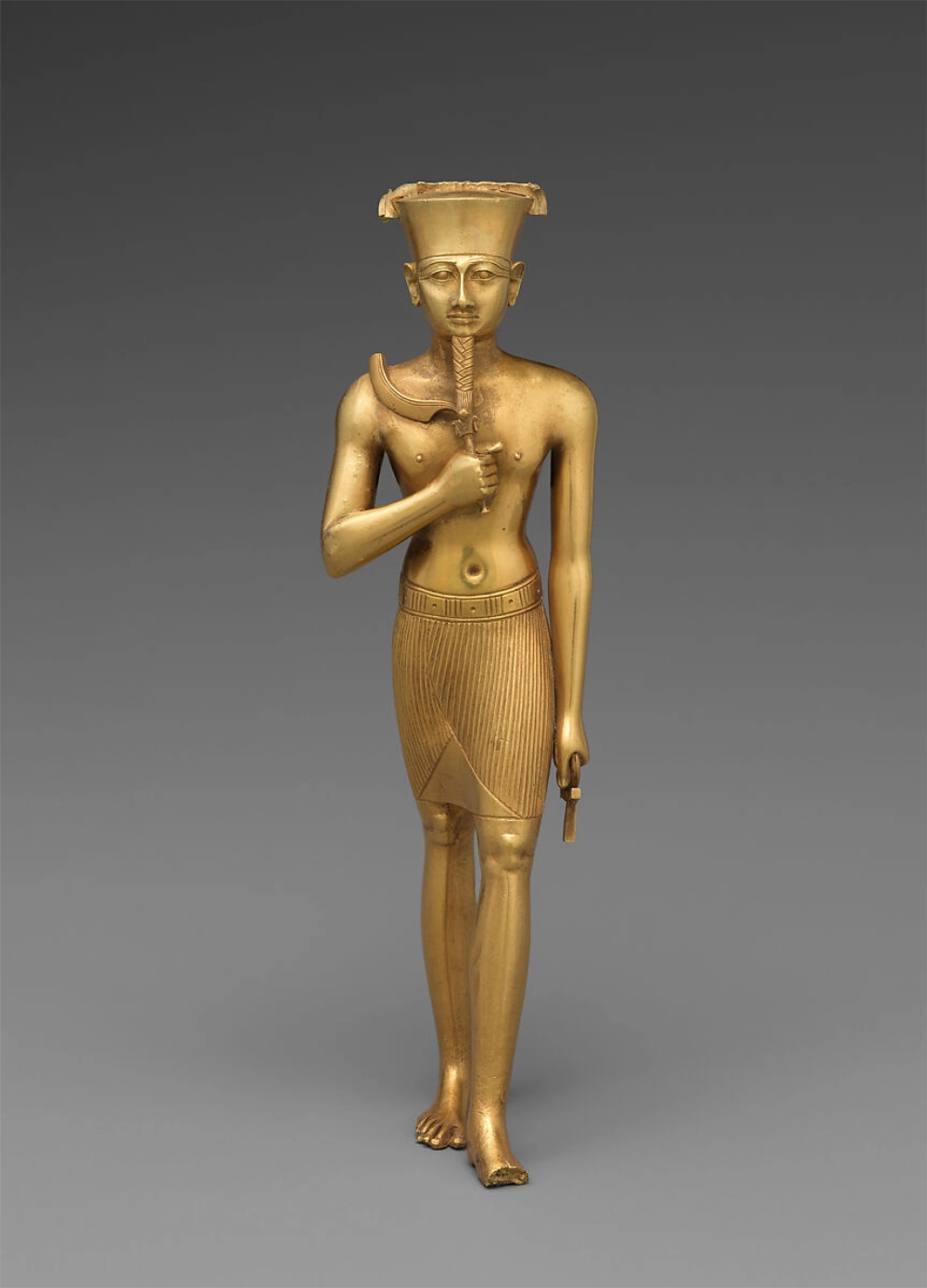
Ancient Egyptian texts describe temples filled with statues and ritual objects made from precious materials. Very few survived.
At The Metropolitan Museum of Art is a small statuette of the Egyptian god Amun, created during Egypt’s Third Intermediate Period, around 945–712 BCE.
It is solid gold.
It weighs almost two pounds.
The Met describes it as a nearly unique ritual object from a major religious center and notes something remarkable about its survival: a solid-gold object like this would ordinarily have been especially vulnerable to being melted down for its metal.
Now look at all the ways we have learned to see value.
The statuette has material value because it is gold.
It has rarity value because very little comparable precious-metal temple statuary survived.
It has craftsmanship value because someone more than 2,700 years ago possessed the knowledge and skill to cast it.
It has artistic and aesthetic value as a work created to be seen and experienced.
It has historical value because it survives from an ancient civilization.
It has scientific value because its materials and manufacture can be studied.
It has cultural value because Amun was among the most important deities of ancient Egypt, and the object helps us understand how Egyptians represented and worshiped him.
And it has another kind of value that is difficult even to name: the simple fact that something so fragile in the sweep of history survived thousands of years and is still here for us to see.
We could put it on a scale.
We could determine its purity.
We could calculate its melt value.
And after doing all of that, we might know the least interesting thing about it.
And Then, Sometimes Scrap Is Just Scrap
After million-dollar dimes, famous diamonds, Tiffany masterpieces, ancient scientific instruments and Egyptian gods, it’s worth coming back to Earth.
Sometimes a broken 14K chain is just a broken 14K chain.
It may have no important maker. No gemstones. No unusual craftsmanship. No historical significance. No collector interest. No special story. And no sentimental importance to its owner.
In that situation, the melt value may indeed be the value, and knowing the melt value becomes extremely useful.
PreciousCalc isn’t an appraiser. It can’t tell you whether something belongs in an auction, a museum, a family jewelry box or a refinery.
It can help you understand one important dimension of value: what the precious metal itself is worth.
And as we’ve seen, there are different ways to look at value. Sometimes the metal is the value. Sometimes it’s only one layer.
And sometimes, remarkably, the materials are but a fraction of the value.
As always, know the numbers. Make better decisions.
Sources and Image Credits
- Stack’s Bowers Galleries: 1894-S Barber Dime and 1794 Flowing Hair Silver Dollar auction records.
- The Metropolitan Museum of Art: The Magnolia Vase; Statuette of Amun; Greater Chiriquí/Diquís gold figure pendant. Met images used here are identified by The Met as Public Domain under its Open Access program.
- Smithsonian National Museum of Natural History: Hope Diamond history and specifications.
- Wikimedia Commons: Hope Diamond photograph by David Bjorgen, CC BY-SA 3.0; Sutton Hoo purse-lid photograph by Rob Roy, CC BY-SA 2.5.
- British Museum: Sutton Hoo purse lid and research on garnet origins and long-distance trade.
- Whipple Museum of the History of Science: 18th-century Persian astrolabe.
- Sotheby’s: Duchess of Windsor Cartier Panthère bracelet auction history.