5 Helpful Tips for Selling Your Gold
Selling gold is often an easy task. Walk in with gold, walk out with cash. But how do you know you didn't get taken advantage of?
Our five tips will help you answer that question before you sell.
Tip 1: Work With Someone Reputable
Start by finding a buyer you can trust.
Look at reviews. Find out how long the buyer has been in business. Ask friends or family about their experiences. Pay attention to whether the buyer explains the process and is willing to answer questions.
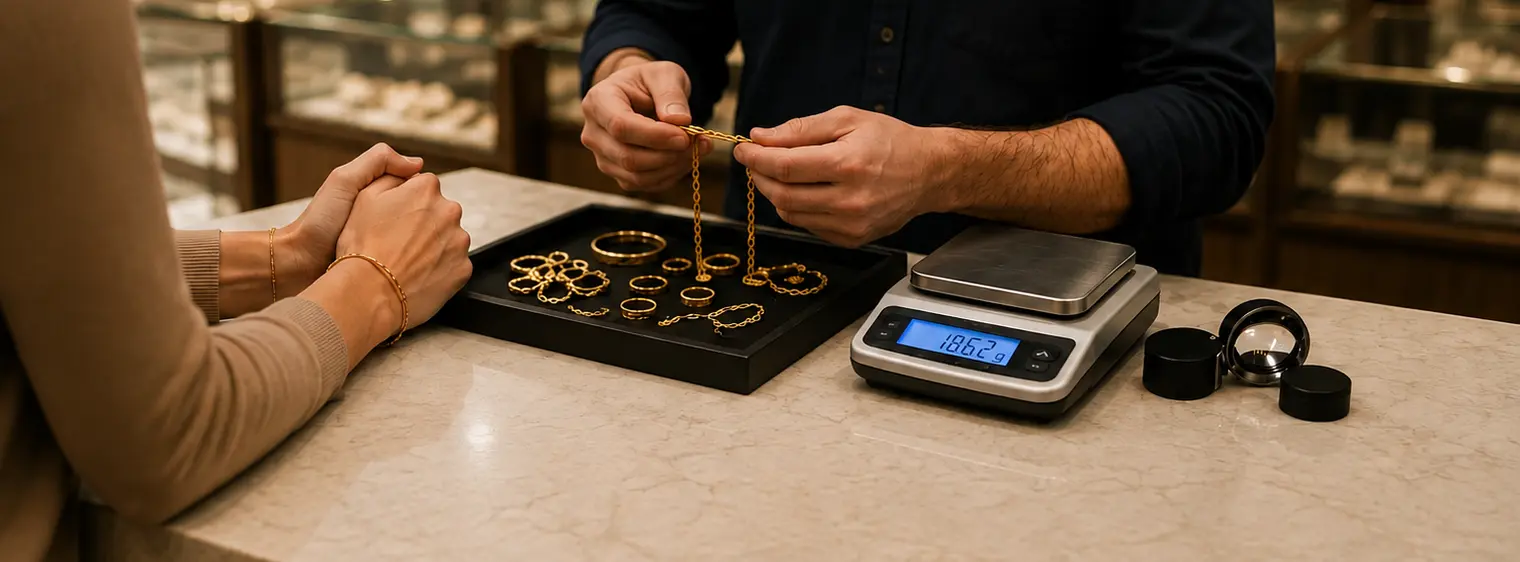
A reputable buyer should be comfortable showing you how your gold is weighed and tested and explaining how the offer was calculated.
You don't have to understand every piece of equipment on the counter. But you should understand what is happening to your property and how the buyer arrived at the number being offered.
A high advertised price doesn't necessarily make someone a good buyer. Reputation, transparency and professionalism matter too.
Tip 2: Know Your Numbers
Before you sell, it helps to know the basic numbers associated with your gold.
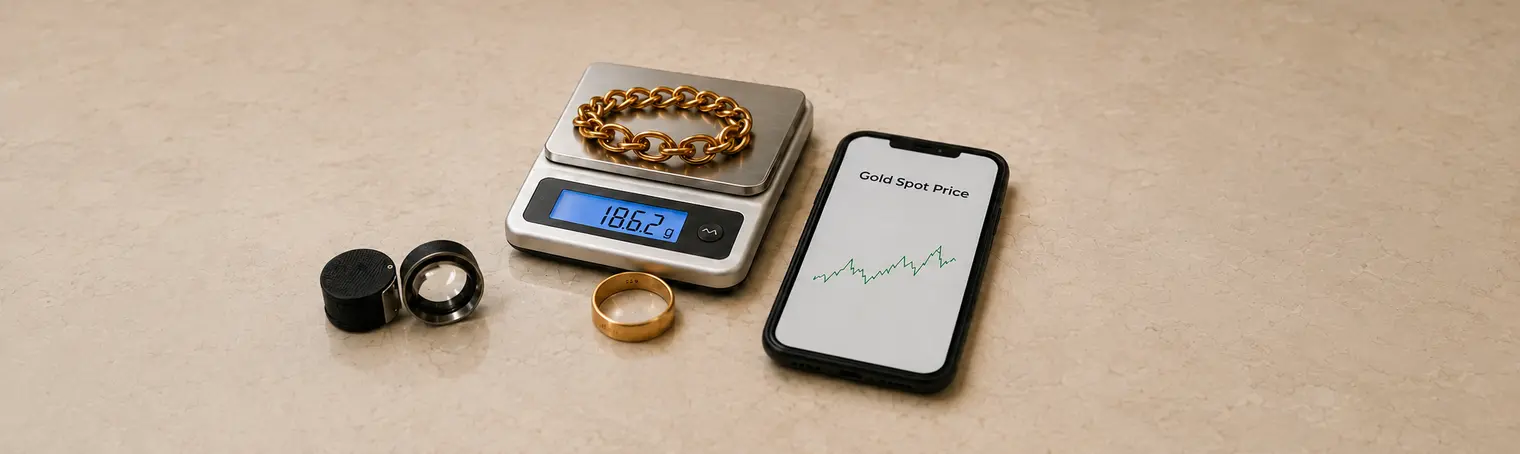
Start with the weight. A jeweler's scale is useful for small pieces, but an ordinary kitchen or dietary scale can also give you a reasonable estimate if it measures in grams.
Next, determine the karat if you can. Karat, usually shown with a K, describes the purity of gold on a 24-part scale. Pure gold is 24K. A 14K piece contains 14 parts gold out of 24, or about 58% gold. An 18K piece contains 18 parts gold out of 24, or 75% gold.
Then check the current spot price of gold.
With those three pieces of information—weight, purity and gold price—you can estimate the melt value of your gold.
That's exactly what PreciousCalc.com is designed to help you do.
There is one more number worth considering: what are you willing to accept?
A buyer will generally offer less than melt value because the buyer has expenses, assumes risk and needs to make a profit. That doesn't automatically make an offer unfair. What matters is understanding the relationship between the offer and the value of the gold.
Know the numbers before you negotiate the numbers.
Tip 3: Know What You Have
Gold has been valuable for thousands of years, but sometimes the value of an object far exceeds the value of the gold within it.
A broken earring with no mate or a damaged chain from high school might simply be worth its gold content. But be careful. Vintage pieces, artifacts and historic works of art may be extremely valuable, and selling them for scrap could be a big mistake.
The important point is that melt value tells you what the gold is worth as gold. It doesn't necessarily tell you what the object is worth.
If something is unusual, old, collectible or potentially valuable for another reason, find out what you have before selling it for its gold content.
Once an object is melted, whatever value it had beyond the gold may be gone forever. Be certain you understand what you have before you decide to sell it for scrap.
Tip 4: Find the Right Buyer
What you have in front of you may change where you want to bring it.
A broken earring may be perfectly suited for a gold buyer purchasing scrap for refining. A collectible coin, antique or designer piece may belong somewhere else.
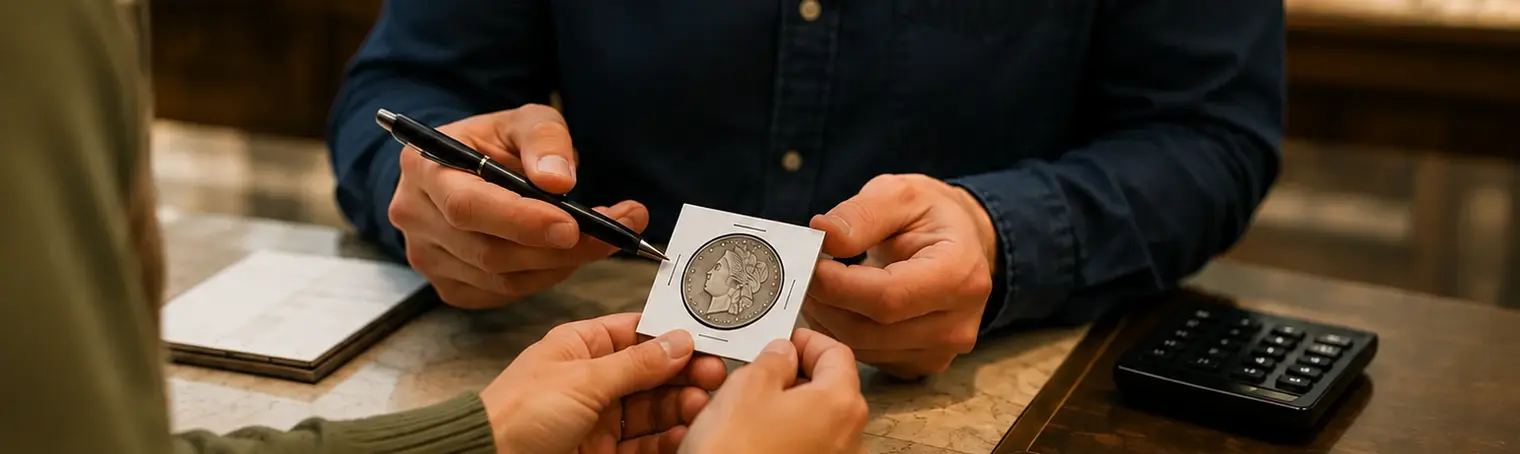
Different buyers may see very different value in exactly the same object. A buyer purchasing primarily for refining may see its gold content. An estate-jewelry buyer may see a piece that can be resold intact. A coin dealer may recognize collectible value in a coin that has little to do with the gold it contains.
That doesn't mean one buyer is right and another is wrong. They're simply looking at the object differently.
A collectible coin deserves the attention of a knowledgeable coin dealer. An unusual antique or designer piece may warrant an appraisal or a conversation with someone who specializes in that type of jewelry.
Know what you have—and take it to someone who values what you have.
The right buyer isn't necessarily the person who buys the most gold. It's the person who understands the value of what you're selling and will deal with you honestly.
Tip 5: Don't Be Pressured
An offer is not an obligation.
Your gold still belongs to you until you decide to sell it.
If you don't understand how the buyer arrived at the offer, ask. If you want time to think about it, take it. If the amount is substantial, consider getting another offer.
And if something simply doesn't feel right, you can leave.
There may be legitimate reasons an offer can't remain open indefinitely. Gold prices change. But the buyer's desire to complete a transaction doesn't have to become your urgency to make a decision.
You can say yes.
You can say no.
And you can say, “I'd like to think about it.”
Bonus Tip: Before You Leave the Buyer
You walked in with your old jewelry, and now you're walking out with cash. Congratulations.
But before you leave the buyer, there is one more thing worth thinking about: being safe.
You've come this far. Let's make sure you keep your money.
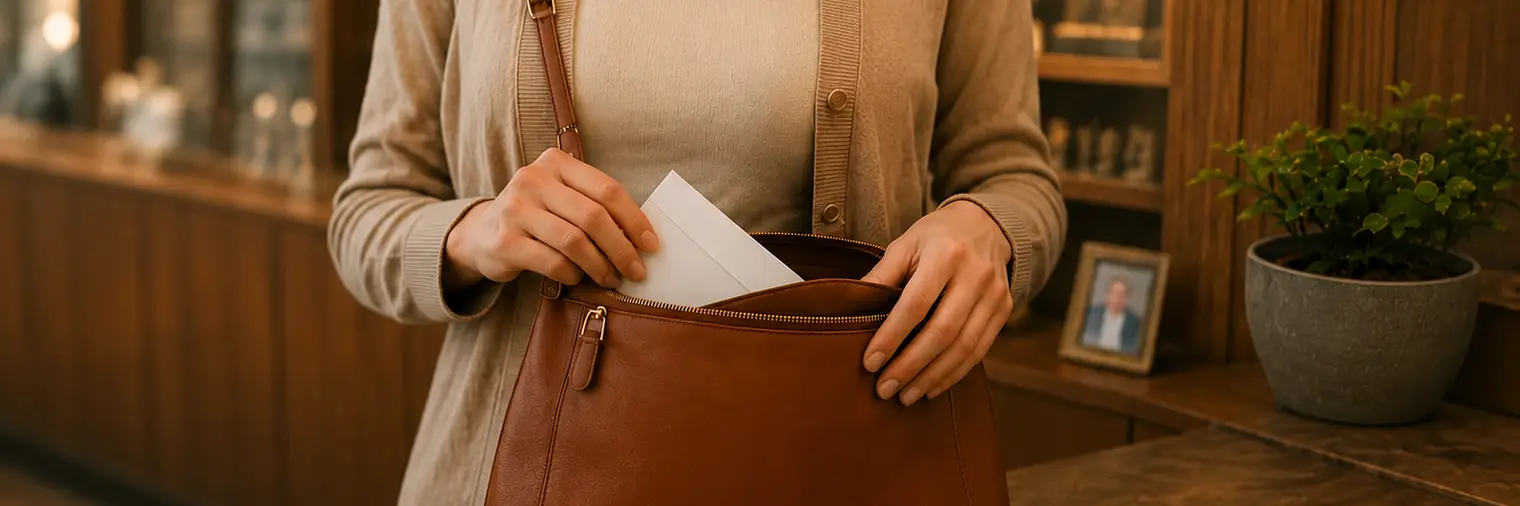
Before you leave, secure the money. Be aware of your surroundings, and don't unnecessarily display or count a large amount of cash in public. For a substantial transaction, consider whether another form of payment would be preferable or whether going directly to your bank makes sense.
There's no reason to be fearful. Just be thoughtful.
You prepared to protect the value of your gold. Once you sell it, remember to protect the proceeds.
Keep these tips in mind and you'll be in a better position when you sell. Remember to work with someone reputable. Know your numbers. Understand what you have and where it may be most valuable. Ask questions when you have them, and remember that accepting the offer is your decision. Saying no is always OK.
A little knowledge beforehand can make it much easier to understand the transaction afterward.
Know the numbers. Make better decisions.
This article is provided for informational and educational purposes only and does not constitute financial, investment, appraisal, or other professional advice. Actual offers may vary based on testing results, market conditions, buyer costs and margins, and other factors. An item's collectible, antique, gemstone, artistic, historical, or resale value may be significantly different from its precious-metal melt value.